Mental Health

Trauma care that meets the memory at its root.

Outpatient PTSD and trauma treatment in Lakeway, Texas. EMDR, prolonged exposure, cognitive processing therapy, and somatic supports prescribed by your comprehensive assessment, not selected from a default menu. Same-day or next-day admission.

Same-day or next-day admission Comprehensive assessment Most insurance accepted
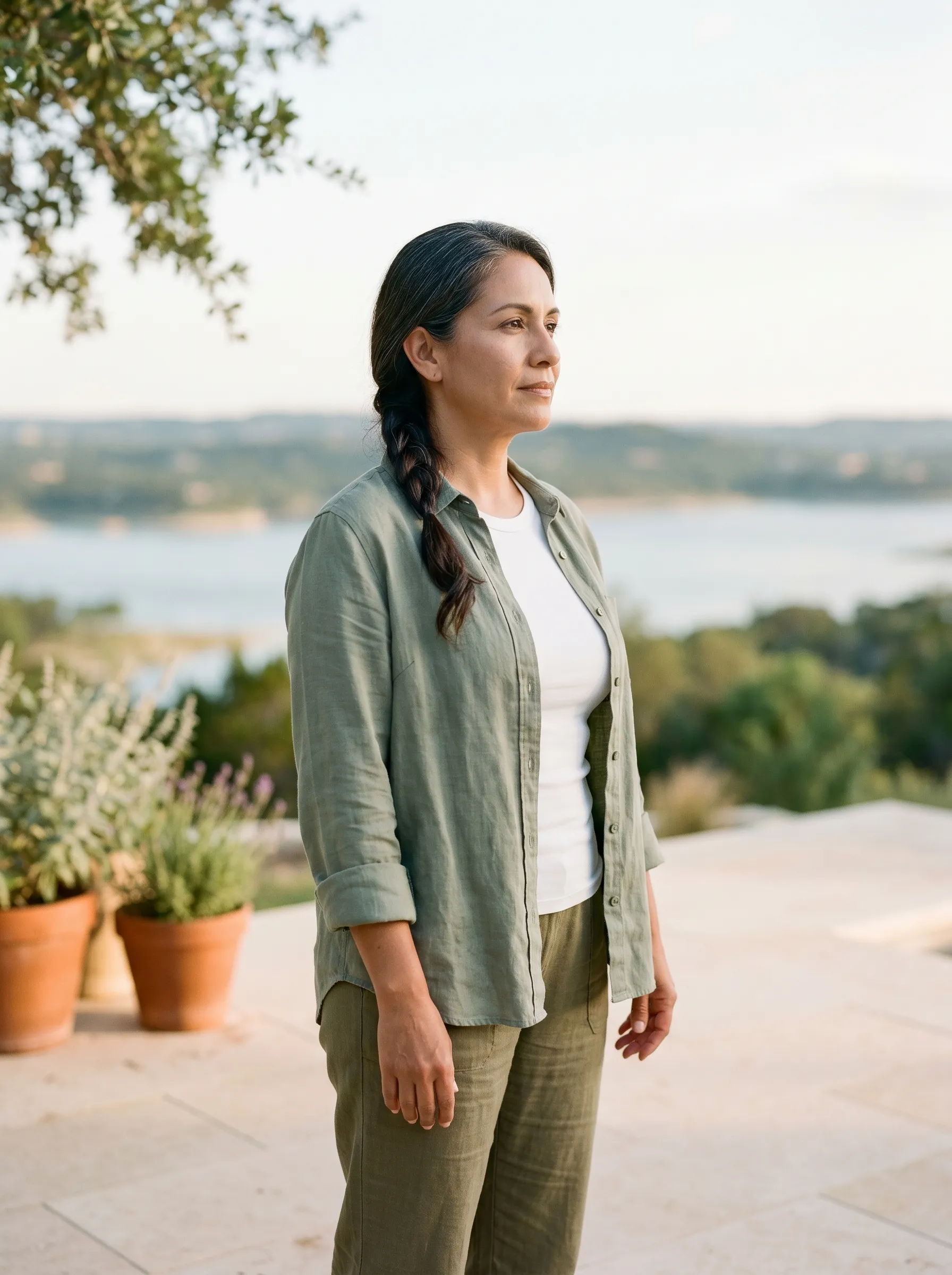
A Hispanic-Latina woman in her mid-40s standing in three-quarter profile on a sun-warmed limestone patio at the edge of a Lake Travis vista, hands relaxed at her sides, calm grounded gaze toward distant water, late golden afternoon Hill Country light.

Recognizing Trauma

Trauma, after the event has passed.

PTSD and complex trauma are highly treatable, especially when the plan is built around the way the memory is stored, not just the symptom that surfaces.

An estimated 3.6 percent of US adults experience PTSD in any given year, around 7.7 million people, and lifetime prevalence sits near 6.8 percent (NIMH). Past-year prevalence is roughly three times higher for women than for men. At The Stepwell Center, the question is rarely whether the events still affect you. The question is how the memory is stored, and what the body is still bracing for.

Trauma describes a family of presentations, not a single disorder. Single-incident PTSD from a car accident, an assault, or a medical event responds differently than complex PTSD rooted in prolonged or developmental trauma, which the ICD-11 codifies around three additional disturbances: affect dysregulation, negative self-concept, and interpersonal difficulties (WHO ICD-11). Trauma-focused psychotherapies (prolonged exposure, cognitive processing therapy, trauma-focused CBT) carry the strongest evidence as first-line treatments, with EMDR strongly suggested as an alternative (APA Clinical Practice Guideline). Trauma sits inside our broader mental health treatment work, which also includes anxiety, depression, OCD, and grief.

Your plan begins with a 2 to 3 day comprehensive assessment that integrates clinical interview, qEEG brain mapping, pharmacogenetic testing when medication is on the table, and standardized psychological testing. The output is a written care plan matched to your clinical profile and delivered across four levels of outpatient care: PHP, IOP, Evening IOP, and Outpatient. All four levels are delivered at our Lakeway, Texas facility in the Lake Travis corridor.

How We Treat PTSD

Six modalities, matched to the trauma.

Specific evidence-based modalities, named in your prescribed plan rather than left implicit. Your combination is chosen from these and others based on your assessment.

  1. EMDR

    Eye Movement Desensitization and Reprocessing works on the way traumatic memories are stored, not on the content of the trauma itself. Bilateral stimulation paired with structured recall helps the nervous system finish processing what got stuck. The lead modality for many single-incident and complex trauma presentations at Stepwell.

  2. Prolonged Exposure & CPT

    Prolonged Exposure and Cognitive Processing Therapy are the two trauma-focused CBT protocols with the strongest evidence in the APA guideline. PE rebuilds tolerance to trauma reminders in graded steps; CPT works on the trauma-related beliefs that organize daily life around the event.

  3. Neurofeedback

    EEG-based biofeedback calibrated to your qEEG baseline. Used alongside trauma-focused therapy for PTSD presentations with strong somatic activation, sleep disruption, or attentional dysregulation patterns, never as a standalone treatment.

  4. Somatic & nervous-system work

    Grounding, interoceptive awareness, and breath-paced exercises help bring an over-activated nervous system back into range. Paired with EMDR and trauma-focused CBT when the assessment shows the body is still carrying the bracing pattern.

  5. Skills work for complex PTSD

    Emotion regulation, distress tolerance, and interpersonal effectiveness skills, drawn from DBT and trauma-informed group work. The standard scaffold before and alongside trauma processing for complex PTSD, where dysregulation has organized the day for years.

  6. Medication management

    Psychiatric medication review and prescription when the assessment supports it. Pharmacogenetic testing informs which medications are most likely to fit your metabolism, reducing the trial-and-error that frustrates many trauma patients with sleep, mood, or hyperarousal layers.

A white woman in her late 40s with shoulder-length silver-blonde hair worn loose, leaning lightly against a weathered cedar fence rail at the edge of a Hill Country wildflower meadow, hands loose on the rail, calm grounded gaze toward Lake Travis horizon bokeh, soft late golden afternoon light.

The Prescribed Care Model

From bracing to resting.

Trauma rarely shows up only as flashbacks. It interlocks with sleep, hyperarousal, irritability, dissociation, relational patterns, and the body's baseline of bracing. A treatment plan that addresses only the memory tends to leave the other threads pulling against the work. Stepwell's Prescribed Care Model assembles a plan that holds the whole shape.

After your assessment, your prescribed plan names the level of care, the modality mix, and the medication considerations that fit you specifically. For acute or single-incident PTSD, you may begin in IOP three days per week with EMDR and trauma-focused CBT as the core modalities, then step down to standard Outpatient as symptoms loosen. For complex PTSD, the arc is typically longer, often starting in PHP for daily skills work and stabilization before trauma processing begins. If work makes daytime sessions impossible, Evening IOP delivers the same clinical content after hours.

For many patients, trauma work is paired with one or two related threads. Anxiety and depression commonly share ground with PTSD, and substance use can develop as a way of managing the unprocessed memory. Those threads are integrated into the same plan rather than handed off to a separate provider. If you are weighing levels of care, our IOP vs PHP guide walks through the comparison in detail.

By the Numbers

PTSD in perspective .

Past-year prevalence

Past-year prevalence

US adults, PTSD, NIMH

US adults affected

US adults affected

In a recent twelve-month period

Day assessment

Day assessment

Before any plan is written

Levels of care

Levels of care

PHP, IOP, Evening IOP, Outpatient

Find the level that fits.

Common Questions

What people ask about PTSD treatment.

Pulled from the questions families and prospective patients ask most often when considering outpatient PTSD and trauma care.

Clinical Perspective

Trauma treatment rarely aims at erasing the memory. It aims at changing how the memory is stored, so that reminders no longer reorganize the day. When the plan fits the specific presentation, the body stops bracing first, and the rest follows.

The Stepwell clinical team